





Uncategorized, Services, Sino Care, Sinus and Migraine, Sinus Headaches
Allergic Rhinitis (Hay Fever):
Aug
Allergic Rhinitis (Hay Fever): Causes, Symptoms, Types, Diagnosis, Conventional & Ayurvedic Treatment
Allergic rhinitis is one of the most common allergic conditions worldwide. Often called “hay fever,” it is not caused by a virus like the common cold. Instead, it occurs when the immune system overreacts to otherwise harmless particles (allergens), releasing histamine and triggering inflammation of the nasal passages.
What Is Allergic Rhinitis?
Allergic rhinitis is the inflammation of the nasal passages caused by an allergic reaction. When a sensitive person inhales allergens, the immune system produces IgE antibodies and releases histamine. This leads to swelling, excess mucus, and the classic symptoms of a runny, blocked, or itchy nose.
Unlike a viral cold, allergic rhinitis is not contagious, usually occurs without fever, and can persist for weeks or months depending on exposure to triggers.
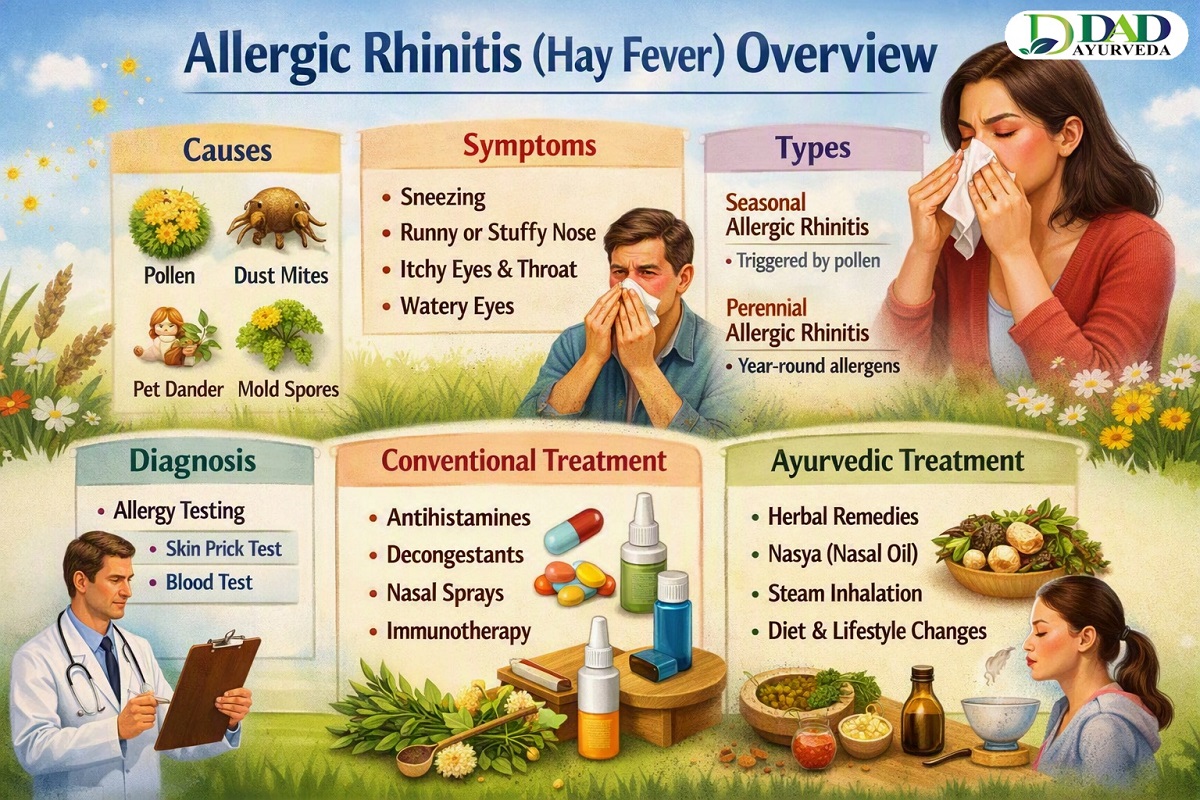
Main Causes (Allergens)
Outdoor allergens
- Tree pollen
- Grass pollen
- Weed pollen
Indoor allergens
- Dust mites
- Pet dander (skin flakes)
- Mold spores
- Cockroach particles
Other common triggers
- Smoke and air pollution
- Strong odors and chemicals
These allergens can cause symptoms seasonally or year-round.
Common Symptoms of Allergic Rhinitis
Typical symptoms include:
- Frequent sneezing
- Runny nose (rhinorrhea)
- Nasal congestion or blocked nose
- Itchy nose, throat, or eyes
- Red, watery eyes
- Postnasal drip
- Sinus pressure or headache
- Fatigue and disturbed sleep
Symptoms can significantly affect daily life, concentration, and quality of sleep.
Types of Allergic Rhinitis
- Seasonal Allergic Rhinitis – Occurs mainly during pollen seasons (spring and summer).
- Perennial Allergic Rhinitis – Present year-round, usually triggered by indoor allergens such as dust mites, pet dander, or mold.
Diagnosis
Diagnosis is primarily clinical and based on:
- Detailed medical history and symptom pattern
- Identification of specific triggers
- Physical examination of the nose and eyes
Advanced tests (when needed) include:
- Skin prick testing
- Blood tests measuring allergen-specific IgE antibodies
- Other allergy-specific evaluations
Conventional Treatment Options
First-line treatments
- Oral or intranasal antihistamines (block histamine)
- Intranasal corticosteroids (most effective for controlling inflammation and congestion)
Additional options
- Decongestants (short-term use)
- Leukotriene modifiers
- Nasal saline irrigation (helps clear allergens and mucus)
Advanced treatment
- Allergen immunotherapy (allergy shots or sublingual tablets) – can reduce long-term sensitivity
Lifestyle and environmental measures
- Avoid known allergens whenever possible
- Use air filtration and keep indoor environments clean
- Wash bedding regularly in hot water (for dust mites)
- Keep windows closed during high pollen counts
- Control humidity to reduce mold growth
Ayurvedic Perspective on Allergic Rhinitis
In Ayurveda, allergic rhinitis is closely correlated with Pratishyaya, most commonly Vata-Kaphaja Pratishyaya. It arises from an imbalance of Vata and Kapha doshas, impaired Agni (digestive fire), accumulation of Ama (metabolic toxins), and blockage of the Pranavaha Srotas (respiratory channels).
When Agni is weak, toxins build up and the body’s natural resistance (Vyadhikshamatva) decreases. Exposure to allergens, cold weather, dust, smoke, incompatible foods, or irregular lifestyle then triggers hypersensitivity reactions in the nasal passages.
Ayurveda does not merely suppress symptoms. It aims to:
- Correct the root imbalance of doshas
- Strengthen digestion and eliminate Ama
- Clear nasal and respiratory channels
- Enhance immunity and prevent recurrence
Ayurvedic Treatment Approaches
1. Nidana Parivarjana (Avoidance of causes)
Avoid cold foods and drinks, curd, heavy/fermented items, exposure to dust, smoke, strong odors, and sudden temperature changes. Follow a light, warm, easily digestible diet.
2. Deepana-Pachana (Improving digestion)
Herbs and formulations that kindle Agni and digest Ama form the foundation of treatment (e.g., Trikatu, Chitrakadi Vati).
3. Nasya Karma (Nasal therapy) – Highly effective
Medicated oils such as Anu Taila or Shadbindu Taila are administered through the nostrils. Nasya cleanses the nasal passages, reduces congestion, strengthens local immunity, and balances Vata-Kapha in the head region. It is one of the most important therapies for Pratishyaya.
4. Internal herbal formulations (commonly used)
- Haridra Khanda – Turmeric-based, strong anti-allergic and anti-inflammatory action
- Sitopaladi Churna and Talisadi Churna – Support respiratory health and immunity
- Guduchi (Tinospora cordifolia) – Excellent immunomodulator
- Tulsi, Pippali, Yashtimadhu, and other respiratory herbs
- Classical preparations such as Tribhuvan Kirti Ras, Vyoshadi Vati, or Chyawanprash (as Rasayana)
5. Panchakarma & supportive therapies (when indicated)
- Vamana (therapeutic emesis) in Kapha-dominant chronic cases
- Dhoomapana (medicated herbal smoke inhalation)
- Shirodhara or gentle local fomentation in selected patients
6. Rasayana (Rejuvenation therapy)
After acute symptoms subside, Rasayana medicines (Guduchi, Amalaki, Ashwagandha, Chyawanprash, etc.) help rebuild Ojas, strengthen immunity, and reduce the tendency for recurrence.
7. Lifestyle & yoga support
- Practice Pranayama (especially Kapalabhati and Nadi Shodhana under guidance)
- Maintain regular sleep and meal timings
- Stay warm and avoid daytime sleep in Kapha seasons
Ayurvedic management is individualized according to the patient’s Prakriti (constitution), dominant dosha, and stage of the disease. Many patients experience significant reduction in sneezing, congestion, and dependence on antihistamines with consistent therapy.
Important Points to Remember
- Allergic rhinitis is not contagious.
- Despite the name “hay fever,” fever is usually absent.
- Symptoms often mimic a common cold, which can delay proper diagnosis.
- It is a chronic but highly manageable condition.
- Allergic rhinitis frequently coexists with asthma or other allergic diseases. Early and holistic management can help prevent progression.
- Combining conventional symptom control (when needed) with Ayurvedic root-cause treatment often gives the best long-term results.
When to Seek Professional Help
If symptoms interfere with sleep, work, or daily activities, or if over-the-counter remedies provide only temporary relief, consult a qualified practitioner. Proper evaluation helps distinguish allergic rhinitis from other causes of nasal congestion and guides the most effective integrated treatment plan.
Disha Arogya Dham Ayurveda & Naturopathy Chikitsalya & Research Center
Experience personalized Ayurvedic care for allergic rhinitis and related allergic conditions. Our approach combines classical therapies such as Nasya, herbal formulations, Panchakarma, and lifestyle guidance for lasting relief.
Call & WhatsApp: +91-7976808977 / 9034100716
Website: dadayurveda.com
Address: 348/4c Jamunapuri, Murlipura 302039
Managing allergic rhinitis effectively starts with understanding your triggers and addressing the root imbalance through a combination of avoidance, appropriate medicines, and Ayurvedic therapies tailored to your constitution.