





Uncategorized
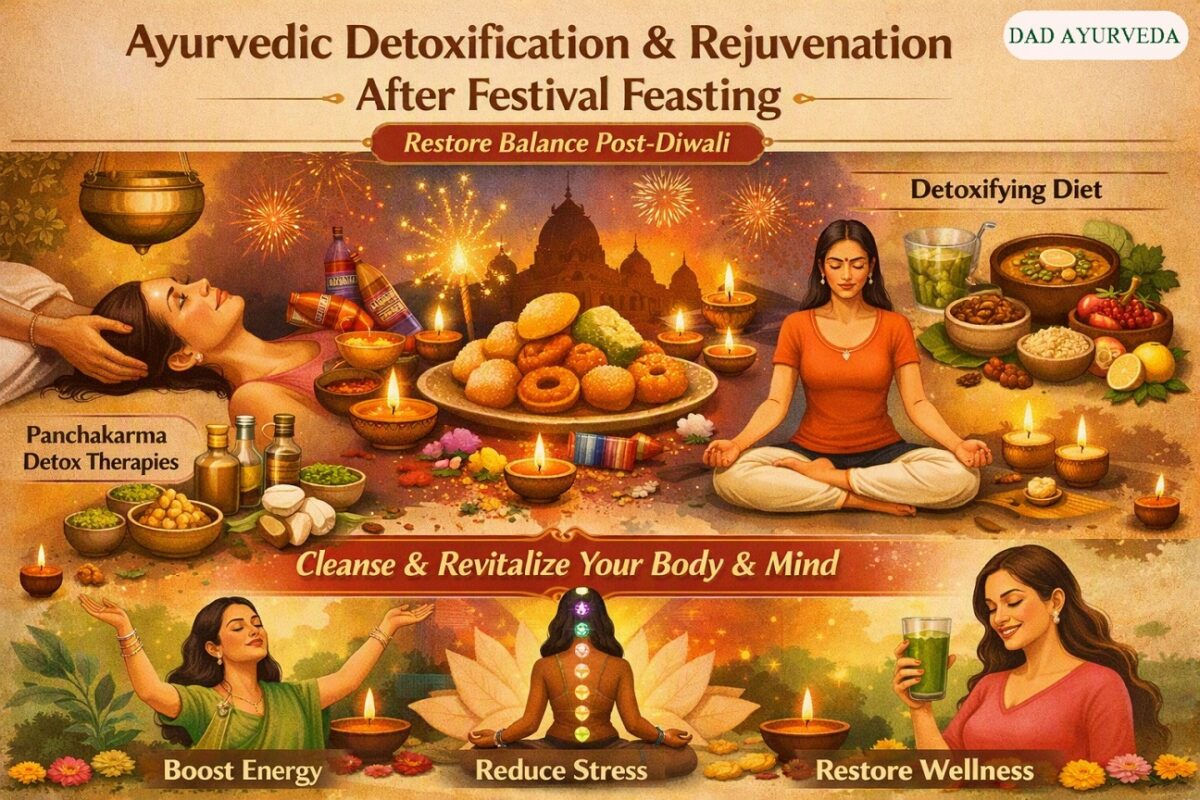
Ayurvedic Detoxification & Rejuvenation After Festival Feasting: Restore Balance Post-Diwali
Jul
Ayurvedic Detoxification & Rejuvenation After Festival Feasting: Restore Balance Post-Diwali
October and November mark the peak festive season in India, with Diwali as the grandest celebration. Joyful gatherings, sweets, rich foods, and late nights bring happiness—but they often leave the body feeling heavy, sluggish, and out of balance. Festival feasting, packed with fats, sugars, and spices, can disrupt digestion and create an accumulation of ama (toxins). Traditional Ayurveda offers a time-tested, holistic path for detoxification and rejuvenation that cleanses the body, mind, and spirit while restoring equilibrium.
Understanding Ayurvedic Detoxification
Ayurveda, the 5,000-year-old Indian system of medicine, views health as the harmony of mind, body, and spirit. Detoxification goes beyond simply eliminating toxins. It focuses on balancing the three doshas—Vata, Pitta, and Kapha—the fundamental energies that govern physiological and psychological functions. When any dosha becomes imbalanced, it becomes the root cause of discomfort and disease.
Post-festival overindulgence commonly aggravates Kapha (heaviness and lethargy) and Pitta (acidity and inflammation), while weakening digestive fire (agni). The result: bloating, sluggishness, poor energy, and a general feeling of heaviness.
Ayurvedic Detoxification & Cleansing Options
Here are practical, accessible Ayurvedic practices ideal after festive excesses:
- Fasting (Upavasa) Give the digestive system a short rest. A brief fast followed by light, easily digestible foods such as khichdi (rice and lentils) supports detoxification. Sip warm water throughout the day to keep the system moving gently.
- Herbal Teas and Infusions Incorporate classic digestive herbs: Triphala (Amla, Baheda & Harad), mulethi, Trikatu (black pepper, pippali, ginger), ajwain, jeera, jaggery, and fennel. These help boost metabolism, clear toxins, and strengthen digestive fire. Consistency matters more than intensity—meet an Ayurvedic practitioner when you feel well, not only when you fall ill.
- Warm Lemon Water Start each morning with warm water mixed with the juice of half a lemon. This simple ritual supports digestion, helps alkalize the system, and assists gentle weight management.
- Ayurvedic Kitchen Spices Turmeric, cumin, and coriander are everyday detoxifiers with anti-inflammatory and digestive benefits. Use them generously in meals—Ayurveda begins in the kitchen.
- Abhyanga (Oil Massage) Daily self-massage with warm sesame oil or specialized formulations improves circulation, nourishes the skin, reduces stress, and promotes a sense of calm. Regular Abhyanga is a cornerstone of post-festival rejuvenation.
- Virog Tridosha Balance Tablet This traditional herbal formulation supports gentle detoxification, strengthens digestion, and helps maintain dosha balance. Taking it before bedtime with lukewarm water is a common supportive practice.
- Yoga and Meditation Yoga postures stimulate digestion and the lymphatic system, while meditation reduces stress-related digestive disturbances. Together they enhance circulation and support the body’s natural cleansing processes.
Supportive Ayurvedic Formulations for Overall Wellness
DAD Ayurveda offers several specialized products that align with detox and rejuvenation goals:
- DAD Body Cleaner – Balance Powder
- DAD Live Care – Liver support vegan supplement
- DAD Ferti-M – for men’s health
- DAD Fertility Tea 1 & 2 – Ayurvedic support for women’s health
- DAD Sumedha Brain Boost Tea – for children
- DAD Porush Prash – for elderly vitality
- DAD DAD-Prash – authentic organic Chyawanprash
A Personalized Approach Is Essential
Ayurveda is never one-size-fits-all. Each person has a unique constitution (prakriti). What works for one individual may not suit another. Consulting a qualified Ayurvedic practitioner allows for a tailored detox plan based on your specific dosha imbalances and lifestyle.
At DAD Ayurveda, personalized consultations are available via telephone, video call, or in-person visits at their clinics. These sessions help create a practical, sustainable plan for cleansing and renewal.
Conclusion
After the festive season, Ayurvedic detoxification and lifestyle adjustments offer the most natural route to cleanse the body, restore balance, and rebuild vitality. By combining simple daily practices—warm lemon water, digestive spices, light meals, Abhyanga, yoga, and supportive herbs—you can transition from festive heaviness into renewed energy and clarity.
Begin gently, stay consistent, and consult an Ayurvedic expert for guidance suited to your constitution. Your body and mind will thank you as you step into the next season feeling lighter, clearer, and more balanced.
Key SEO terms naturally included: Ayurvedic detoxification, post-Diwali detox, Ayurvedic rejuvenation after festival, detox after Diwali, Ayurvedic cleansing, tridosha balance, ama toxins, Abhyanga oil massage, Triphala detox, warm lemon water Ayurveda.
Ayurvedic Seasonal Diet Changes (Ritucharya)
In Ayurveda, health depends on aligning diet and lifestyle with the seasons. This practice is called Ritucharya (Ritu = season, Charya = regimen). The year is divided into six seasons of roughly two months each. External weather affects the three doshas (Vata, Pitta, Kapha) and digestive fire (Agni). Adjusting food helps maintain balance, prevent disease, and support strength.
The year has two halves:
- Uttarayana / Adana Kala (mid-January to mid-July) — depleting phase (sun stronger, body strength decreases).
- Dakshinayana / Visarga Kala (mid-July to mid-January) — nourishing phase (body strength increases).
1. Hemanta (Early Winter: mid-November – mid-January)
- Dosha effect: Digestive fire becomes strong because cold pushes Agni inward.
- Diet focus: Heavy, nourishing, sweet, sour, and salty foods.
- Recommended: Fresh grains (rice, wheat), milk and dairy, ghee, sugarcane products, meat soups, nuts, warm oily foods.
- Avoid: Light, dry, or cold foods that aggravate Vata.
- Lifestyle note: Abhyanga (oil massage), warm clothing, moderate exercise.
2. Shishira (Late Winter: mid-January – mid-March)
- Similar to Hemanta but colder and drier.
- Diet: Continue warming, heavy, sweet, sour, and oily foods (ghee, nuts, dairy, traditional sweets like til-gud laddoos or gajar halwa).
- Avoid: Cold drinks and very light meals.
- Kapha begins to accumulate.
3. Vasanta (Spring: mid-March – mid-May)
- Dosha effect: Accumulated Kapha liquefies and can cause heaviness, congestion, allergies, and sluggish digestion.
- Diet focus: Light, dry, warm, bitter, pungent, and astringent foods that reduce Kapha.
- Recommended: Old barley, wheat, millet, green gram (moong), honey mixed with water, bitter vegetables (methi, neem flowers), spices (ginger, black pepper, mustard).
- Avoid: Heavy, sweet, sour, oily, cold foods, new grains, and excessive dairy.
- Lifestyle note: Exercise, dry massage (Udvartana), early rising.
4. Grishma (Summer: mid-May – mid-July)
- Dosha effect: Pitta increases; strength and Agni are weak. Body needs cooling and hydration.
- Diet focus: Sweet, light, cool, liquid, and mildly unctuous foods.
- Recommended: Rice, sweet fruits (mango, melon, grapes), cucumber, diluted yogurt (chaas/lassi), coconut water, milk preparations with rose or cardamom, soaked dry fruits.
- Avoid: Salty, sour, pungent, hot, spicy, and fried foods; strong alcohol.
- Lifestyle note: Rest in cool places, avoid midday sun and heavy exercise.
5. Varsha (Monsoon / Rainy: mid-July – mid-September)
- Dosha effect: Agni is weakest; Vata aggravates due to cold and moisture; immunity lowers.
- Diet focus: Warm, light, easily digestible, moderately oily foods with digestive spices.
- Recommended: Freshly cooked khichdi (rice + moong dal), warm vegetable soups, soft cooked vegetables, old grains, ginger, cumin, hing, warm milk with ginger.
- Avoid: Raw salads, leafy vegetables from outside, curd at night, cold drinks, leftover or heavy food, street food.
- Lifestyle note: Stay warm and dry; light activity.
6. Sharad (Autumn: mid-September – mid-November)
- Dosha effect: Pitta that accumulated in monsoon becomes aggravated by residual heat.
- Diet focus: Sweet, bitter, and astringent tastes that pacify Pitta; light and cooling.
- Recommended: Old rice, wheat, barley, sweet fruits, ghee in moderation, cooling herbs.
- Avoid: Excessively hot, spicy, sour, and oily foods.
- This season often follows festive eating, so gentle detox and lighter meals help restore balance.
Key Principles Across Seasons
- Prefer freshly prepared, seasonal, and local foods.
- Eat according to your digestive capacity (Agni) — never force heavy meals when digestion is weak.
- Spices and herbs are adjusted seasonally (warming in cold/wet weather, cooling in hot weather).
- Transitions between seasons (Sandhi Kala) are vulnerable periods — shift diet gradually.
- Individual constitution (Prakriti) and current imbalances still matter; a practitioner can personalize recommendations.
Why it matters: Following Ritucharya prevents seasonal illnesses, supports immunity, keeps digestion strong, and maintains energy throughout the year. After festival feasting (often in Sharad/Hemanta), moving toward lighter, balancing foods helps clear ama (toxins) and restore equilibrium.
For personalized guidance based on your dosha and location, consult a qualified Ayurvedic practitioner.