





Uncategorized, Infertility, Ovarian Cyst
Ovarian Cyst: Types, Symptoms, and When to Worry
Aug
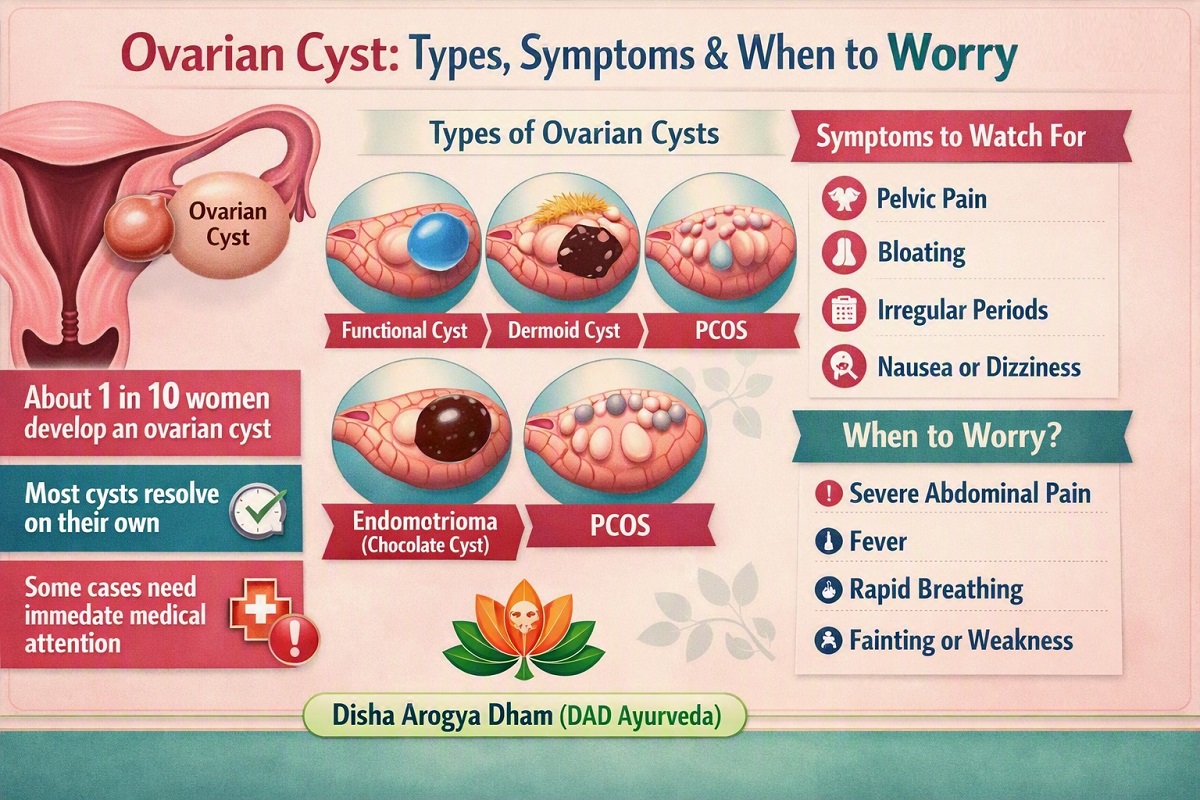
Ovarian Cyst: Types, Symptoms, and When to Worry About 1 in 10 women develops an ovarian cyst | Most cysts resolve on their own | Some cases need immediate medical attention
An ovarian cyst is a fluid-filled sac that forms in or on the ovary. It is a very common condition in women. Functional cysts are the most frequent type during reproductive years. The good news is that the majority of cysts disappear on their own without any special treatment. However, in some cases they can cause pain, complications, or rarely raise concern for cancer. Correct information helps you take the right steps at the right time.
Main Types of Ovarian Cysts
- Follicular Cyst The most common type. During the menstrual cycle, if the follicle (which contains the developing egg) does not release the egg, it fills with fluid and forms a cyst. It usually resolves on its own within 1–3 cycles.
- Corpus Luteum Cyst After ovulation, the empty follicle fails to shrink and instead fills with fluid or blood. It may occasionally cause pain or light bleeding, but most cases resolve spontaneously.
- Endometrioma (Chocolate Cyst) Associated with endometriosis. These cysts contain old, dark-brown blood. They are often painful and can affect fertility.
- Dermoid Cyst / Teratoma (Mature Cystic Teratoma) Relatively uncommon. These can contain tissues such as hair, skin, or teeth. They grow slowly and may sometimes require surgery.
Other types such as cystadenomas can also occur. Cysts in postmenopausal women need more careful evaluation because the risk of cancer is slightly higher.
Symptoms
Many women have no symptoms at all. When symptoms appear, they may include:
- Pelvic pain (dull or sharp, usually on one side, often worse during periods or intercourse)
- Bloating or a feeling of fullness in the abdomen
- Irregular menstrual cycles
- Pressure symptoms: frequent urination or difficulty with bowel movements
- Pain during intercourse
- Occasional hormonal symptoms
Size comparison: Small cysts may be the size of a pea or grape; larger ones can reach the size of a tennis ball or orange.
When to Worry (Seek Immediate Medical Help)
The following signs may indicate an emergency:
- Sudden severe pelvic or abdominal pain (possible cyst rupture or ovarian torsion)
- Pain accompanied by fever
- Vomiting, dizziness, or feeling faint
- Abnormal bleeding in early pregnancy
Cancer warning signs (especially after menopause): persistent bloating, early satiety, unexplained weight loss, and ongoing pain. Diagnosis is usually made with ultrasound, and if needed CT/MRI and CA-125 blood test.
Diagnosis and Modern Treatment
- Watchful waiting: Suitable for most functional cysts.
- Hormonal medications (help prevent new cysts from forming).
- Surgery: Laparoscopy or open surgery for large, complex, painful, or suspicious cysts.

Ayurvedic Perspective and Disha Arogya Dham (DAD Ayurveda) Ovarian Cyst Treatment
In Ayurveda, ovarian cysts are often viewed as an imbalance of Kapha-Vata doshas, similar to Granthi or Vidradhi. The treatment aims to balance the doshas, purify the system, reduce inflammation, and support reproductive health. Herbal medicines, Panchakarma (especially Basti), diet, lifestyle changes, and daily routine often provide relief in many cases.
Disha Arogya Dham (DAD Ayurveda) is an Ayurveda and Naturopathy centre based in Jaipur that offers holistic treatment. Their Ovarian Cyst Disease Treatment Package (for 30 days) includes the following:
| Medicine Name | Dosage | Before/After Food |
|---|---|---|
| DAD Fertility Tea-1 | Make a decoction twice a day and drink it hot | After food |
| DAD Fertility Tea-2 | Make a decoction twice a day and drink it hot | After food |
| DAD Sumedha Brain Boost Tea | Make a decoction twice a day and drink it hot | After food |
| DAD Live-Care | Make a decoction of Live-Care and drink 30 ml thrice a day | After meals |
| DAD Garbh Care | To be placed in the uterus once a week | As indicated |
This package is for 30 days only. After 30 days, DAD Ayurveda experts review the case and recommend further treatment accordingly. The package focuses on natural hormone balance, reducing inflammation, and supporting reproductive health.
Important Note: Ayurvedic treatment is not a substitute for modern medicine but can be complementary. Always consult a qualified doctor (gynaecologist and Ayurvedic physician) before starting any medicine or package. In cases of severe pain, torsion, or suspected cancer, go to the hospital immediately.
Conclusion Ovarian cysts are common and mostly harmless. Regular check-ups, attention to symptoms, and timely treatment help you stay healthy. For natural and holistic options, you may consider the Ovarian Cyst Treatment package from Disha Arogya Dham and DAD Ayurveda.
For more information or consultation, contact DAD Ayurveda. Stay healthy!
Keywords: Disha Arogya Dham, DAD Ayurveda, Ovarian Cyst Treatment