





Uncategorized
Acute Sinusitis (Intense Sinusitis):
Aug
Acute Sinusitis: Symptoms, Causes, Diagnosis, Treatment & Home Remedies (Complete Guide)
Acute sinusitis (also called acute rhinosinusitis or a sinus infection) is inflammation and swelling of the sinuses that usually lasts less than four weeks. It commonly follows a cold, blocks normal drainage, and causes mucus buildup, facial pressure, and congestion. Most cases are viral and improve within 7–10 days with simple care. Bacterial infection occurs in only a small percentage of cases.
This comprehensive guide covers acute sinusitis symptoms, causes, risk factors, diagnosis, treatment options, home remedies, prevention tips, and when to see a doctor—everything you need to manage or prevent a sinus infection effectively.
What Is Acute Sinusitis?
Acute sinusitis occurs when the hollow spaces around the nose (sinuses) become inflamed. This interferes with mucus drainage and creates pressure. Unlike chronic sinusitis (symptoms lasting 12 weeks or longer), acute sinusitis resolves relatively quickly in most people.
Acute Sinusitis Symptoms
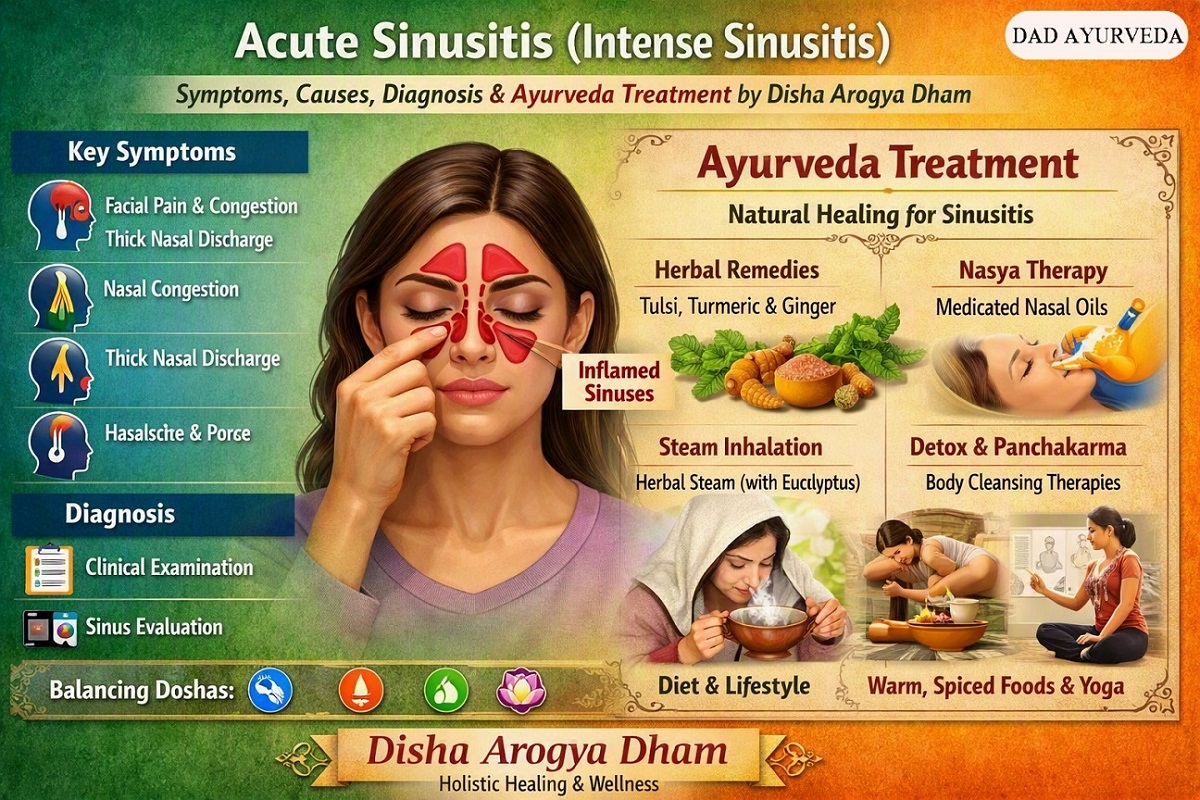
The most common acute sinusitis symptoms include:
- Thick yellow or green nasal discharge or postnasal drip
- Nasal congestion or blockage that makes breathing through the nose difficult
- Facial pain, pressure, swelling, or tenderness around the eyes, cheeks, nose, or forehead (often worse when bending forward)
Other frequent signs and symptoms of a sinus infection:
- Headache
- Ear pressure or fullness
- Aching in the upper teeth
- Reduced or lost sense of smell
- Cough (especially at night)
- Bad breath
- Fatigue
- Mild fever
Symptoms that last more than 10 days, worsen after initial improvement, or include high fever may indicate bacterial acute sinusitis.
When to See a Doctor for Sinusitis
Most people with acute sinusitis do not need medical care. Contact a healthcare provider if:
- Symptoms last longer than 7–10 days
- Symptoms improve then suddenly worsen
- You develop a persistent fever
- You have recurrent sinus infections
Seek emergency care for warning signs of complications:
- Severe pain, swelling, or redness around the eyes
- High fever
- Confusion
- Double vision or vision changes
- Stiff neck
Causes of Acute Sinusitis
Viral infections—especially the common cold—are the leading cause of acute sinusitis. The virus triggers swelling that blocks sinus openings. Bacteria can then grow in the trapped mucus in a minority of cases.
Risk Factors for Sinus Infections
You face a higher risk of developing acute sinusitis if you have:
- Allergies or allergic rhinitis
- A deviated septum, nasal polyps, or other structural abnormalities
- Cystic fibrosis or a weakened immune system
- Regular exposure to cigarette smoke or air pollution
Complications of Untreated Sinusitis
Serious complications are rare but can include chronic sinusitis, spread of infection to the eye socket (risking vision problems), meningitis, or bone/skin infections.
How Is Acute Sinusitis Diagnosed?
Diagnosis is usually based on your symptoms and a physical exam. Your doctor may check for facial tenderness and look inside your nose. Additional tests (rarely needed for typical cases) can include:
- Nasal endoscopy
- CT scan (if complications are suspected)
- Nasal or sinus cultures
- Allergy testing
Acute Sinusitis Treatment Options
Most cases of acute sinusitis clear on their own. Treatment focuses on symptom relief:
Medications that help
- Saline nasal sprays or rinses
- Nasal corticosteroid sprays (fluticasone, budesonide, mometasone) to reduce inflammation
- Over-the-counter pain relievers and short-term decongestants
- Antibiotics only when bacterial infection is likely (symptoms lasting >10 days, severe, or worsening)
Always finish a full antibiotic course if prescribed. Antibiotics do not help viral sinusitis.
Effective Home Remedies for Sinusitis
These self-care steps often provide significant relief from acute sinusitis symptoms:
- Rest and stay hydrated
- Breathe warm moist air (steam inhalation or hot showers)
- Apply a warm compress to the face
- Perform nasal irrigation with a neti pot or squeeze bottle using sterile saline solution
- Use a clean humidifier in dry rooms
Avoid prolonged use of decongestant nasal sprays to prevent rebound congestion.
How to Prevent Acute Sinusitis
- Wash hands frequently and avoid close contact with people who have colds
- Manage allergies effectively
- Avoid cigarette smoke and polluted air
- Keep indoor air moist with a clean humidifier
Preparing for Your Appointment
Make a list of:
- All symptoms and when they started
- Personal and family medical history (especially allergies, asthma, or immune issues)
- All medications, vitamins, and supplements you take
- Questions for the doctor (e.g., “Is this viral or bacterial?”, “Do I need antibiotics?”, “What home measures work best?”, “When should I return if symptoms don’t improve?”)
Your doctor will likely ask about symptom duration and severity, what makes them better or worse, smoking or pollutant exposure, and any previous sinus issues.
Acute sinusitis is usually self-limited. Prompt attention to symptoms, good self-care, and knowing when to seek professional help lead to the best outcomes. If symptoms persist or recur frequently, further evaluation for underlying causes (allergies, structural issues, or chronic sinusitis) is worthwhile.
Frequently Asked Questions About Acute Sinusitis
How long does acute sinusitis last? Most viral cases improve within 7–10 days. Bacterial cases may last longer without treatment.
Is acute sinusitis contagious? The viruses that often trigger it can spread, but the sinus infection itself is not directly contagious.
Can allergies cause acute sinusitis? Yes. Allergies can inflame nasal passages and increase the risk of sinus infections.
When are antibiotics needed for a sinus infection? Only for confirmed or strongly suspected bacterial cases that are severe, persistent beyond 10 days, or worsening after initial improvement.
What is the difference between acute and chronic sinusitis? Acute lasts less than four weeks; chronic lasts 12 weeks or longer despite treatment.
Key Takeaways
Acute sinusitis is common, usually viral, and self-limiting. Focus on symptom relief with saline rinses, nasal steroids, rest, and hydration. See a doctor for prolonged, severe, or worsening symptoms. Proper prevention—hand hygiene, allergy control, and avoiding irritants—reduces your risk of future sinus infections.
If you experience frequent sinus problems, consult an ENT specialist or allergist to identify underlying causes such as structural issues or chronic inflammation. Early attention leads to faster recovery and fewer complications.