


Uncategorized
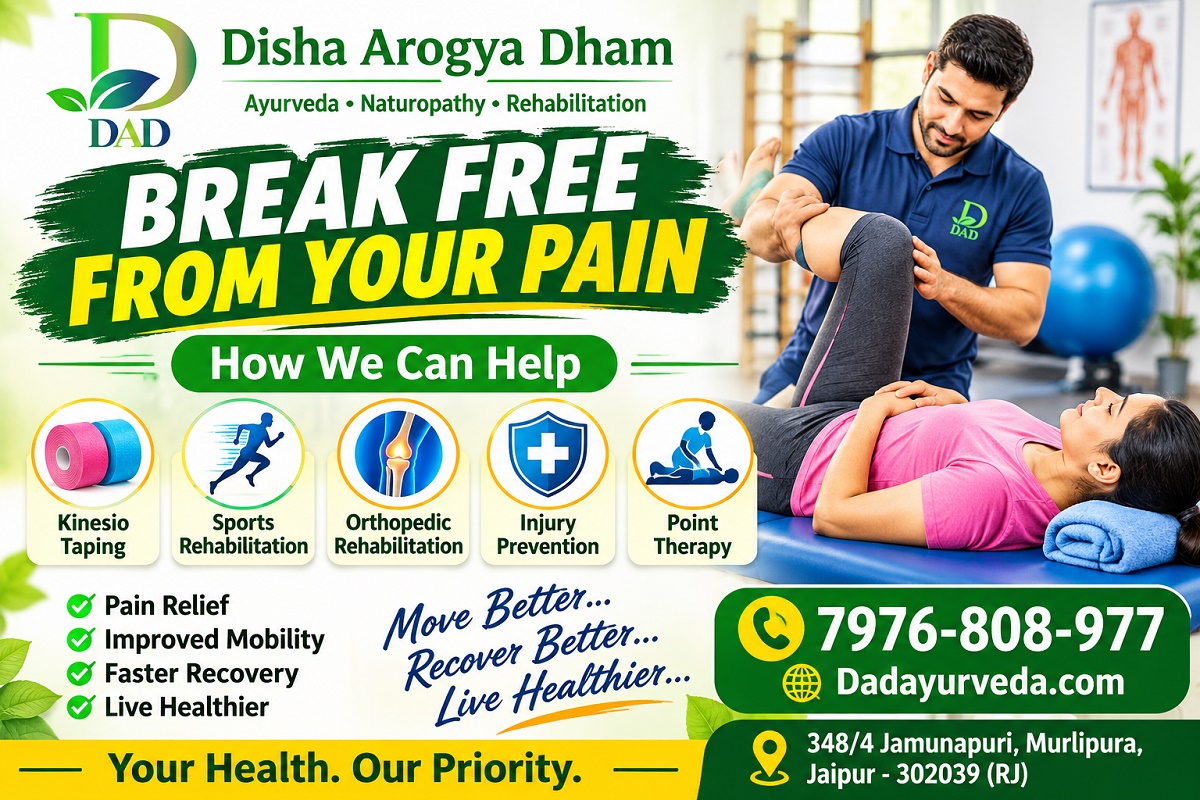
Break Free From Your Pain:
Nov
Break Free From Your Pain: Discover Ayurveda, Naturopathy and Rehabilitation at Disha Arogya Dham, Jaipur
Move Better. Recover Better. Live Healthier.
Pain can affect almost every aspect of daily life. Whether it is persistent back pain, neck stiffness, shoulder discomfort, a sports injury, an accident-related injury, or difficulty moving because of joint problems, physical discomfort can make even simple activities challenging.
Imagine finding it difficult to walk comfortably, climb stairs, sit at your desk, exercise, play your favourite sport, or complete your daily household activities. Over time, pain can affect not only physical movement but also confidence, productivity, sleep, and overall quality of life.
However, taking the right steps towards recovery can make a meaningful difference.
At Disha Arogya Dham, Jaipur, we believe that rehabilitation should focus on understanding the individual, improving movement, supporting recovery, and encouraging a healthier lifestyle. Our traditional Ayurveda and naturopathy-based point therapy environment, combined with practical rehabilitation approaches, aims to create a supportive atmosphere for individuals seeking help with pain and mobility-related concerns.
Our approach, known as Positive Motion Point Therapy, brings attention to movement, physical comfort, rehabilitation, and patient-focused care.
Whether you are dealing with a work-related injury, a vehicle accident injury, an orthopaedic concern, or a sports-related problem, our goal is to help you explore suitable rehabilitation options under professional guidance.
If you are searching online for an Ayurveda and rehabilitation centre in Jaipur, sports rehabilitation in Jaipur, Kinesio Taping, or point therapy treatment, discover how Disha Arogya Dham may support your journey towards better movement.
1. Understanding Pain: Why Does Your Body Need Attention?
Pain is one of the body’s ways of communicating that something may need attention. It can develop suddenly after an injury or gradually because of repetitive movements, prolonged sitting, physical overuse, or underlying health conditions.
Some people experience short-term discomfort after physical activity, while others deal with recurring pain that interferes with everyday routines.
Pain can affect different parts of the body, including:
-
Lower back and upper back
-
Neck and shoulders
-
Knees and ankles
-
Elbows and wrists
-
Hips and legs
-
Muscles and surrounding soft tissues
Common factors associated with musculoskeletal discomfort include poor posture, muscle weakness, repetitive movements, sports injuries, inadequate recovery, and previous accidents.
For example, spending long hours working on a computer without appropriate breaks may contribute to neck and shoulder discomfort. Similarly, lifting heavy objects incorrectly can place unnecessary stress on the back.
Athletes may experience muscle strains, ligament injuries, or joint-related problems because of repetitive training or sudden movements.
It is important to remember that pain can have different causes. Therefore, identifying the underlying reason is an important part of choosing an appropriate treatment or rehabilitation programme.
At Disha Arogya Dham, the emphasis is on understanding individual concerns and exploring suitable approaches to support mobility and physical recovery.
2. Why Choose an Ayurveda and Rehabilitation Centre in Jaipur?
Jaipur is a growing city where people balance professional responsibilities, family commitments, education, sports, and other daily activities. Busy schedules, prolonged sitting, physical work, and limited opportunities for exercise can contribute to lifestyle-related physical discomfort.
Many individuals look for healthcare approaches that consider their overall physical well-being rather than focusing only on temporary comfort.
Ayurveda and naturopathy are traditional systems that emphasise individual assessment, lifestyle practices, and holistic wellness. Rehabilitation, meanwhile, focuses on restoring or improving physical function, movement, strength, and participation in everyday activities.
Combining these perspectives can provide individuals with an opportunity to explore different supportive approaches to their health.
When choosing an Ayurveda and rehabilitation centre in Jaipur, consider the following:
Individual assessment: Every person’s body, lifestyle, injury history, and physical requirements are different.
Qualified professional guidance: Treatment and rehabilitation should be planned or supervised by appropriately qualified professionals.
Personalised care: Rehabilitation should consider the person’s age, physical condition, medical history, and recovery goals.
Movement-focused support: Appropriate movement, exercise, and rehabilitation techniques can help improve physical function.
Patient education: Understanding posture, movement habits, and injury prevention can help individuals make informed decisions.
Safe treatment practices: The suitability of each technique should be evaluated before it is used.
At Disha Arogya Dham, we aim to create a welcoming and encouraging environment for people exploring Ayurveda, naturopathy, point therapy, and rehabilitation services.
3. What Is Positive Motion Point Therapy?
Positive Motion Point Therapy is the approach promoted at Disha Arogya Dham, with an emphasis on movement, physical comfort, and rehabilitation.
The concept focuses on the relationship between physical movement, muscle function, flexibility, and everyday activities.
People experiencing muscular discomfort or restricted movement may benefit from an appropriate assessment to understand which areas require attention.
Depending on the individual’s condition and professional assessment, a rehabilitation programme may involve selected hands-on techniques, movement-based activities, posture education, and other suitable supportive interventions.
The purpose is to encourage comfortable movement and help individuals work towards their functional goals.
Important Elements of Positive Motion Point Therapy
1. Understanding the concern
The first step is understanding where the discomfort occurs, when it started, which activities aggravate it, and how it affects everyday movement.
2. Identifying movement limitations
A professional assessment may consider flexibility, mobility, posture, muscle function, and the individual’s ability to perform specific movements.
3. Individualised rehabilitation
Different people require different approaches. A programme should be adapted according to the person’s needs, health status, and recovery goals.
4. Supporting comfortable movement
Appropriate movement-based exercises and rehabilitation techniques may help improve flexibility, strength, and physical confidence.
5. Encouraging consistency
Rehabilitation is often a gradual process. Following professional instructions and maintaining appropriate activity habits can support progress.
At Disha Arogya Dham, Positive Motion Point Therapy represents our commitment to practical, patient-focused care in a pleasant and encouraging environment.
4. Traditional Ayurveda and Naturopathy: A Holistic Perspective
Ayurveda is a traditional Indian system of health and wellness that has been practised for centuries. It emphasises individual constitution, lifestyle, diet, daily routines, and traditional therapeutic practices.
Naturopathy focuses on supporting health through lifestyle-based and natural approaches, including appropriate physical activity, nutrition, relaxation, and other wellness practices.
These systems may be explored alongside conventional medical care where appropriate.
How Ayurveda Approaches Wellness
Traditional Ayurveda considers several aspects of a person’s lifestyle and overall well-being.
These may include:
-
Daily routines and sleep habits
-
Food choices and digestion
-
Physical activity and mobility
-
Stress management
-
Individual constitution
-
Traditional therapies selected according to individual needs
Ayurvedic practitioners may recommend specific traditional therapies after considering the individual’s health and suitability.
Not every therapy is appropriate for every person. People with existing medical conditions, injuries, allergies, or other health concerns should seek qualified professional advice before beginning treatment.
The Role of Naturopathy
Naturopathy places considerable attention on lifestyle and natural wellness practices.
Depending on individual suitability, supportive recommendations may include:
-
Maintaining regular physical activity
-
Following a balanced dietary pattern
-
Practising appropriate stretching
-
Maintaining healthy sleep routines
-
Managing daily stress
-
Developing better posture habits
-
Avoiding unnecessary physical strain
At Disha Arogya Dham, Ayurveda and naturopathy form part of the broader wellness environment in which patients can explore appropriate options for their individual requirements.
5. Kinesio Taping: Supporting Movement and Rehabilitation
Kinesio Taping is a technique that involves applying specialised elastic therapeutic tape to selected areas of the body.
It is commonly used in sports and physical rehabilitation settings as a supportive technique.
Unlike conventional rigid athletic tape, elastic kinesiology tape is designed to move with the skin and body.
Depending on the application and individual circumstances, it may be used to provide sensory feedback, support movement awareness, or complement a rehabilitation programme.
Potential Uses of Kinesio Taping
A trained professional may consider Kinesio Taping for selected situations involving:
-
Sports-related muscular discomfort
-
Shoulder movement concerns
-
Knee-related rehabilitation
-
Muscle strains
-
Posture and movement awareness
-
Selected soft-tissue conditions
-
Support during certain rehabilitation activities
Why Is Professional Application Important?
Kinesiology tape should be applied with attention to the individual’s condition, skin sensitivity, movement requirements, and treatment goals.
Incorrect application may cause discomfort, skin irritation, or other problems.
It is also important to understand that Kinesio Taping is not a substitute for medical diagnosis, appropriate rehabilitation exercises, or necessary medical treatment.
At Disha Arogya Dham, Kinesio Taping is one of the rehabilitation-related services highlighted for people exploring movement support and recovery options.
6. Sports Rehabilitation: Helping Athletes Return to Movement
Sports and physical activities are excellent ways to maintain fitness, improve endurance, and support overall health.
However, sports can also involve physical stress, repetitive movements, sudden changes in direction, and occasional injuries.
From amateur players to professional athletes, anyone participating in physical activity may experience an injury.
Common sports-related problems include:
-
Muscle strains
-
Ligament injuries
-
Ankle sprains
-
Knee discomfort
-
Shoulder injuries
-
Tendon-related problems
-
Overuse injuries
-
Movement restrictions following injury
Sports rehabilitation focuses on restoring appropriate physical function after an injury and preparing individuals for a safe return to their activities.
Why Is Sports Rehabilitation Important?
Simply waiting for pain to disappear may not be enough to prepare an athlete for returning to demanding physical activity.
A person may feel more comfortable during daily activities but still lack the strength, balance, flexibility, or movement control required for sports.
A suitable rehabilitation programme may therefore address several areas.
Flexibility: Appropriate mobility activities can help address movement restrictions.
Strength: Progressive strengthening can help improve the ability of muscles to perform physical tasks.
Balance: Balance activities can help develop coordination and movement control.
Movement patterns: Sport-specific movement training may help individuals prepare for the demands of their activities.
Gradual return to sports: Returning to training should be based on appropriate clinical assessment and functional readiness.
At Disha Arogya Dham, our sports rehabilitation focus is intended to support individuals seeking guidance on injury recovery, movement, and physical activity.
7. Orthopedic Rehabilitation: Supporting Better Everyday Movement
Orthopaedic conditions can affect bones, joints, muscles, ligaments, and other structures involved in movement.
They may develop because of injuries, age-related changes, repetitive physical stress, surgery, or other medical conditions.
Some individuals experience difficulty walking, sitting, standing, climbing stairs, lifting objects, or performing everyday household activities.
Orthopaedic rehabilitation focuses on helping individuals improve physical function and participate more comfortably in daily life.
Common Concerns That May Require Orthopaedic Rehabilitation
Back discomfort: Back problems may affect sitting, standing, bending, and walking.
Neck stiffness: Neck-related concerns may interfere with comfortable head movement and daily activities.
Knee problems: Knee discomfort may make climbing stairs, walking, or standing difficult.
Shoulder restrictions: Shoulder problems may affect reaching, lifting, dressing, and other routine activities.
Hip and ankle concerns: These conditions may affect walking, balance, and mobility.
Post-injury rehabilitation: Individuals recovering from fractures, ligament injuries, or other orthopaedic problems may require a professionally supervised rehabilitation plan.
What Can an Orthopaedic Rehabilitation Programme Include?
Depending on the diagnosis and professional recommendations, rehabilitation may involve:
-
Mobility exercises
-
Progressive strengthening
-
Flexibility activities
-
Balance training
-
Posture education
-
Functional movement exercises
-
Guidance for daily activities
The exact programme should be selected according to the individual’s medical condition and recovery stage.
At Disha Arogya Dham, we encourage individuals experiencing movement-related difficulties to seek appropriate assessment before starting any rehabilitation programme.
8. Injury Prevention: Take Care of Your Body Before Problems Develop
Injury prevention is an important part of maintaining an active and healthy lifestyle.
Although not every injury can be prevented, adopting safe movement habits and appropriate physical conditioning may reduce certain avoidable risks.
Many injuries occur because of repetitive stress, inadequate preparation, poor movement techniques, excessive training, or insufficient recovery.
Practical Injury Prevention Tips
1. Warm up before exercise
Begin physical activity with an appropriate warm-up. Gradually increasing activity intensity prepares the body for more demanding movements.
2. Maintain proper technique
Incorrect exercise techniques may place unnecessary stress on joints, muscles, and other body structures.
3. Increase exercise intensity gradually
Avoid sudden increases in training duration, weight, or exercise intensity.
4. Maintain flexibility
Appropriate mobility and flexibility activities can help maintain comfortable movement.
5. Strengthen supporting muscles
Progressive strengthening exercises may improve the body’s ability to manage physical demands.
6. Take adequate recovery time
Rest and recovery are important components of physical conditioning.
7. Use appropriate footwear
Select footwear suitable for the activity and your individual needs.
8. Listen to your body
Do not ignore persistent or worsening pain. Seek professional advice when symptoms continue or interfere with normal activities.
9. Maintain good posture
Pay attention to posture while sitting, standing, lifting, and working.
10. Seek timely professional guidance
An early assessment may help identify movement problems and guide appropriate next steps.
At Disha Arogya Dham, injury prevention is an important part of our movement-focused rehabilitation philosophy.
9. Work-Related Injuries: Taking Care of Your Physical Health
Many people spend several hours performing repetitive physical tasks at work.
Office employees may remain seated for extended periods, while factory workers, construction workers, drivers, and other professionals may perform physically demanding activities.
These different working conditions can place stress on the musculoskeletal system.
Common Work-Related Physical Concerns
-
Neck and shoulder discomfort
-
Lower-back strain
-
Wrist and elbow problems
-
Repetitive movement-related discomfort
-
Muscle fatigue
-
Knee discomfort
-
Posture-related movement problems
How Can You Support Your Body at Work?
Office employees should consider adjusting their workstation to support a comfortable posture.
Keep frequently used items within easy reach, avoid remaining in one position for excessive periods, and take appropriate movement breaks.
People performing manual work should follow workplace safety instructions and use proper lifting techniques.
Avoid twisting the body while carrying heavy objects. Where possible, use suitable equipment or assistance when handling heavy loads.
If pain continues, becomes severe, or affects work performance, consult an appropriate healthcare professional.
A rehabilitation professional may recommend suitable exercises and movement strategies after assessing the person’s condition.
10. Vehicle Accident Injuries: Why Professional Assessment Matters
Road accidents can result in different types of physical injuries.
Some injuries are immediately noticeable, while others may become more apparent hours or days after an accident.
Common accident-related injuries may include:
-
Soft-tissue injuries
-
Neck strain
-
Back injuries
-
Shoulder injuries
-
Knee injuries
-
Fractures
-
Ligament injuries
-
Reduced mobility
Following a vehicle accident, medical assessment is important, even when symptoms initially appear mild.
People with severe pain, suspected fractures, head injuries, weakness, numbness, breathing difficulties, or other concerning symptoms should seek urgent medical attention.
After appropriate medical evaluation and once rehabilitation is considered safe, a professional may recommend a suitable recovery programme.
Rehabilitation After an Accident
Depending on the nature and severity of the injury, rehabilitation may focus on:
-
Improving comfortable movement
-
Restoring appropriate flexibility
-
Gradually rebuilding strength
-
Improving balance and coordination
-
Supporting daily functional activities
-
Rebuilding confidence in movement
Recovery timelines vary significantly between individuals.
At Disha Arogya Dham, individuals recovering from accident-related injuries can enquire about appropriate rehabilitation options following medical assessment and clearance.
11. Back Pain and Neck Discomfort: Understanding Everyday Challenges
Back pain and neck discomfort are common concerns among people with sedentary lifestyles, physically demanding occupations, and certain musculoskeletal conditions.
Prolonged sitting, repetitive movements, inadequate physical conditioning, and poor workstation arrangements may contribute to discomfort.
Common Reasons for Back Discomfort
-
Prolonged sitting
-
Incorrect lifting techniques
-
Muscle strain
-
Physical overuse
-
Limited physical activity
-
Certain spinal conditions
Common Reasons for Neck Discomfort
-
Long hours using mobile phones
-
Poor computer workstation positioning
-
Repetitive head movements
-
Muscle tension
-
Previous injuries
-
Certain cervical spine conditions
What Can Help?
The appropriate approach depends on the underlying cause.
A healthcare professional may recommend medical evaluation, activity modification, appropriate exercises, posture education, or other treatment options.
Some people may benefit from supervised mobility and strengthening activities.
It is important not to assume that all back or neck pain has the same cause.
Seek urgent medical attention if back pain is accompanied by new bladder or bowel control problems, significant leg weakness, numbness around the groin, or other serious neurological symptoms.
At Disha Arogya Dham, our focus is to encourage informed decisions and appropriate rehabilitation for individuals experiencing movement-related discomfort.
12. Joint Pain and Mobility: Making Everyday Activities Easier
Healthy joint movement is important for walking, running, bending, lifting, and completing everyday activities.
However, joint-related problems can make even simple movements uncomfortable.
Knee, shoulder, hip, wrist, and ankle concerns may develop because of injuries, overuse, degenerative changes, inflammatory conditions, or other medical problems.
How Can Rehabilitation Support Joint Function?
A suitable rehabilitation programme may include:
Mobility exercises: Carefully selected exercises may help maintain or improve available joint movement.
Muscle strengthening: Strengthening surrounding muscles may support functional movement.
Balance activities: Balance training can help improve movement control.
Activity modification: Adjusting certain activities may help reduce unnecessary physical stress.
Posture education: Appropriate posture and movement techniques may support everyday function.
People with persistent joint swelling, redness, fever, sudden severe pain, or an inability to bear weight should obtain prompt medical assessment.
The best rehabilitation plan depends on the diagnosis and the individual’s overall health.
13. Who Can Explore Rehabilitation Services at Disha Arogya Dham?
Rehabilitation is not limited to professional athletes or people recovering from major accidents.
Different individuals may require support to maintain or improve their physical function.
Our services may be relevant to people exploring suitable care for:
Office professionals: Individuals experiencing movement difficulties associated with prolonged desk work.
Sports enthusiasts: People seeking guidance after sports-related injuries.
Working professionals: Individuals experiencing physical discomfort associated with repetitive or demanding work.
Older adults: People who may need professionally guided support for mobility and everyday activities.
Individuals recovering from injuries: People who have received medical assessment and are ready for an appropriate rehabilitation programme.
Fitness enthusiasts: Individuals looking for guidance on movement, physical conditioning, and injury prevention.
People with orthopaedic concerns: Individuals who need an assessment to determine whether specific rehabilitation approaches are suitable.
Every person is different. Age, medical history, injury severity, and existing conditions should always be considered before starting treatment.
14. What Makes a Patient-Friendly Rehabilitation Environment Important?
Rehabilitation is not only about exercises and physical techniques. The environment in which individuals receive care can also influence their experience.
People dealing with pain or injury may feel uncertain, frustrated, or anxious about their recovery.
A welcoming and supportive environment can help them feel more comfortable asking questions and understanding their rehabilitation programme.
At Disha Arogya Dham, we value:
Personal attention: Understanding the individual’s concerns and goals.
Encouragement: Helping patients remain motivated during their recovery journey.
Clear communication: Explaining the purpose of recommended rehabilitation activities.
Individual consideration: Recognising that recovery needs vary from person to person.
Professional guidance: Encouraging appropriate assessment and safe rehabilitation practices.
Patient education: Helping individuals understand movement, posture, activity, and recovery.
Our objective is to create a positive and encouraging atmosphere where individuals can explore suitable ways to improve their physical well-being.
15. What Should You Expect During Your First Rehabilitation Visit?
If you are visiting a rehabilitation facility for the first time, you may have questions about the process.
Knowing what to expect can make your visit more comfortable.
Step 1: Discuss Your Concerns
You may be asked about your symptoms, injury history, medical conditions, daily activities, and treatment goals.
Explain when the problem started and which movements make it better or worse.
Step 2: Review Your Medical History
Share relevant information about previous injuries, surgeries, existing conditions, medications, and any investigations or medical reports.
Step 3: Assessment
Depending on the professional’s qualifications and the nature of your concern, an assessment may consider posture, mobility, strength, flexibility, balance, and functional movement.
Step 4: Understand Your Options
The professional should explain which rehabilitation techniques may be appropriate and whether additional medical evaluation is necessary.
Step 5: Discuss Your Programme
If rehabilitation is suitable, you may receive recommendations regarding exercises, treatment sessions, lifestyle adjustments, and follow-up.
Step 6: Monitor Your Progress
Your programme may be adjusted depending on your response, functional improvements, and changing needs.
Remember that rehabilitation is not a competition. It should be safe, progressive, and appropriate for your condition.
16. The Importance of Combining Rehabilitation With Healthy Lifestyle Habits
Professional rehabilitation is only one part of maintaining physical health.
Everyday habits can also influence physical function, recovery, and long-term well-being.
Maintain Regular Physical Activity
Choose appropriate activities according to your health and physical ability.
Walking, swimming, cycling, and supervised exercise may be suitable for different individuals.
Eat a Balanced Diet
Include a variety of vegetables, fruits, whole grains, protein sources, and other nutritious foods.
A healthcare professional or qualified nutritionist can provide guidance according to individual needs.
Prioritise Sleep
Sleep plays an important role in general health and physical recovery.
Maintain a regular sleep schedule and create a comfortable sleeping environment.
Manage Stress
Stress can affect sleep, daily routines, and how people experience physical discomfort.
Relaxation activities, breathing exercises, and appropriate recreational activities may support general well-being.
Avoid Self-Medication
Do not start medicines, herbal preparations, or intensive physical treatments without appropriate professional advice.
Natural does not automatically mean risk-free. Herbal products can have side effects and may interact with prescribed medicines.
Stay Consistent
Small, sustainable improvements in daily habits are often more practical than sudden lifestyle changes.
17. Why Early Attention to Physical Problems Matters
Many people ignore physical discomfort because of busy schedules or the belief that the problem will disappear automatically.
While some minor discomfort may settle with appropriate rest and self-care, persistent symptoms should not be ignored.
Early medical assessment may help identify the cause of a problem and determine whether treatment or rehabilitation is required.
For example, a person experiencing recurring knee discomfort may benefit from understanding whether the issue is related to an injury, joint condition, muscle weakness, or another cause.
Similarly, someone experiencing repeated back pain may need a proper evaluation before beginning exercises or manual therapy.
Seeking appropriate advice can help prevent unsuitable self-treatment and support better-informed decisions.
At Disha Arogya Dham, we encourage people to take their physical health seriously and explore suitable rehabilitation options when needed.
18. Why Consider Disha Arogya Dham in Jaipur?
Choosing a suitable healthcare or rehabilitation facility is an important decision.
At Disha Arogya Dham, our aim is to provide a welcoming environment where individuals can explore traditional Ayurveda, naturopathy, point therapy, and rehabilitation-related services.
Our Key Service Areas
Kinesio Taping
A specialised elastic taping technique that may be used as a supportive component of selected rehabilitation programmes.
Sports Rehabilitation
Movement-focused rehabilitation for individuals dealing with sports-related injuries and physical activity limitations.
Orthopedic Rehabilitation
Supportive rehabilitation approaches for people with selected musculoskeletal and orthopaedic concerns.
Injury Prevention
Education and guidance on appropriate movement, physical conditioning, and safe activity habits.
Point Therapy
Our Positive Motion Point Therapy approach focuses on individual movement concerns and physical rehabilitation.
Our Approach
We believe that every individual deserves attention, respect, and clear communication.
Our objective is to help people understand their physical concerns and explore appropriate care under professional guidance.
We also recognise that different injuries require different approaches. Therefore, no single therapy or technique should be considered suitable for everyone.
If you are looking for an Ayurveda and rehabilitation centre in Jaipur, you can contact Disha Arogya Dham to learn more about the services available and whether they are appropriate for your requirements.
19. Frequently Asked Questions About Ayurveda and Rehabilitation in Jaipur
Q1. Where can I find an Ayurveda and rehabilitation centre in Jaipur?
Disha Arogya Dham is located at 348/4 Jamunapuri, Murlipura, Jaipur, Rajasthan – 302039. You can contact the centre at 7976-808-977 or visit Dadayurveda.com for further information.
Q2. What is Positive Motion Point Therapy?
Positive Motion Point Therapy is the approach promoted by Disha Arogya Dham, focusing on physical movement, individual concerns, and rehabilitation. Its suitability depends on the individual’s condition and professional assessment.
Q3. What is Kinesio Taping used for?
Kinesio Taping uses elastic therapeutic tape and may be included in selected rehabilitation programmes to provide sensory feedback or support movement awareness. Its effectiveness varies according to the condition and application.
Q4. Can sports rehabilitation help after an injury?
Sports rehabilitation may help individuals work towards restoring strength, flexibility, balance, coordination, and sport-related function following an injury. The programme should be based on an appropriate diagnosis and professional assessment.
Q5. What is orthopedic rehabilitation?
Orthopaedic rehabilitation focuses on improving movement and physical function in people with selected bone, joint, muscle, and soft-tissue conditions.
Q6. Is Ayurveda suitable for every type of pain?
No. Ayurveda is not suitable as a replacement for necessary medical diagnosis or emergency treatment. The suitability of any traditional therapy depends on the person’s medical condition and should be evaluated by a qualified practitioner.
Q7. Can rehabilitation help with back pain?
Depending on the cause, rehabilitation may include appropriate mobility exercises, strengthening, posture education, and activity modification. Persistent or severe back pain requires medical evaluation.
Q8. How long does rehabilitation take?
Recovery time depends on the type of injury, severity, age, general health, and individual response to treatment. Some people require a short programme, while others need longer-term rehabilitation.
Q9. Is Kinesio Taping painful?
Application is generally designed to be comfortable, but individual experiences vary. Skin irritation or discomfort can occur. The tape should be removed and professional advice sought if a reaction develops.
Q10. Can I start rehabilitation without consulting a doctor?
That depends on your symptoms and condition. New injuries, severe pain, suspected fractures, neurological symptoms, and other serious concerns require medical evaluation. Rehabilitation should begin when it is considered appropriate.
Q11. Does injury prevention require daily exercise?
Not necessarily. The appropriate frequency and type of exercise depend on your health, age, activity level, and goals. Consistent, suitable physical activity is generally beneficial.
Q12. How can I contact Disha Arogya Dham?
You can call 7976-808-977 or visit Dadayurveda.com. The centre is located at 348/4 Jamunapuri, Murlipura, Jaipur – 302039, Rajasthan.
20. Take the First Step Towards Better Movement
Living with physical discomfort can make everyday activities more challenging, but you do not have to ignore your health or struggle without guidance.
Understanding your condition, seeking appropriate professional assessment, following a suitable rehabilitation programme, and adopting healthy lifestyle habits can help you work towards better physical function.
Whether you are exploring sports rehabilitation, orthopaedic rehabilitation, Kinesio Taping, injury prevention, Ayurveda, naturopathy, or Positive Motion Point Therapy, choosing an appropriate approach is an important first step.
At Disha Arogya Dham, we are committed to creating a pleasant and encouraging environment for individuals exploring rehabilitation and holistic wellness.
Our focus is on movement, patient awareness, individual needs, and supportive care.
BREAK FREE FROM YOUR PAIN!
Move Better. Recover Better. Live Healthier.
Contact Disha Arogya Dham today to learn more about our rehabilitation and wellness services.
Disha Arogya Dham
Ayurveda | Naturopathy | Point Therapy | Rehabilitation
Call Now: 7976-808-977
Website: https://Dadayurveda.com
Address: 348/4 Jamunapuri, Murlipura, Jaipur – 302039, Rajasthan, India.
Your Health. Our Priority.
Medical Disclaimer
The information in this article is intended for general educational and informational purposes only. It does not constitute medical advice, diagnosis, or treatment. Ayurveda, naturopathy, Kinesio Taping, and rehabilitation techniques may not be suitable for every individual or condition. Results vary from person to person. Always consult an appropriately qualified healthcare professional before beginning treatment or rehabilitation. Do not delay or replace necessary medical care, prescribed treatment, or emergency services with traditional therapies.