






Uncategorized
Renal Replacement Therapy (RRT):
Aug
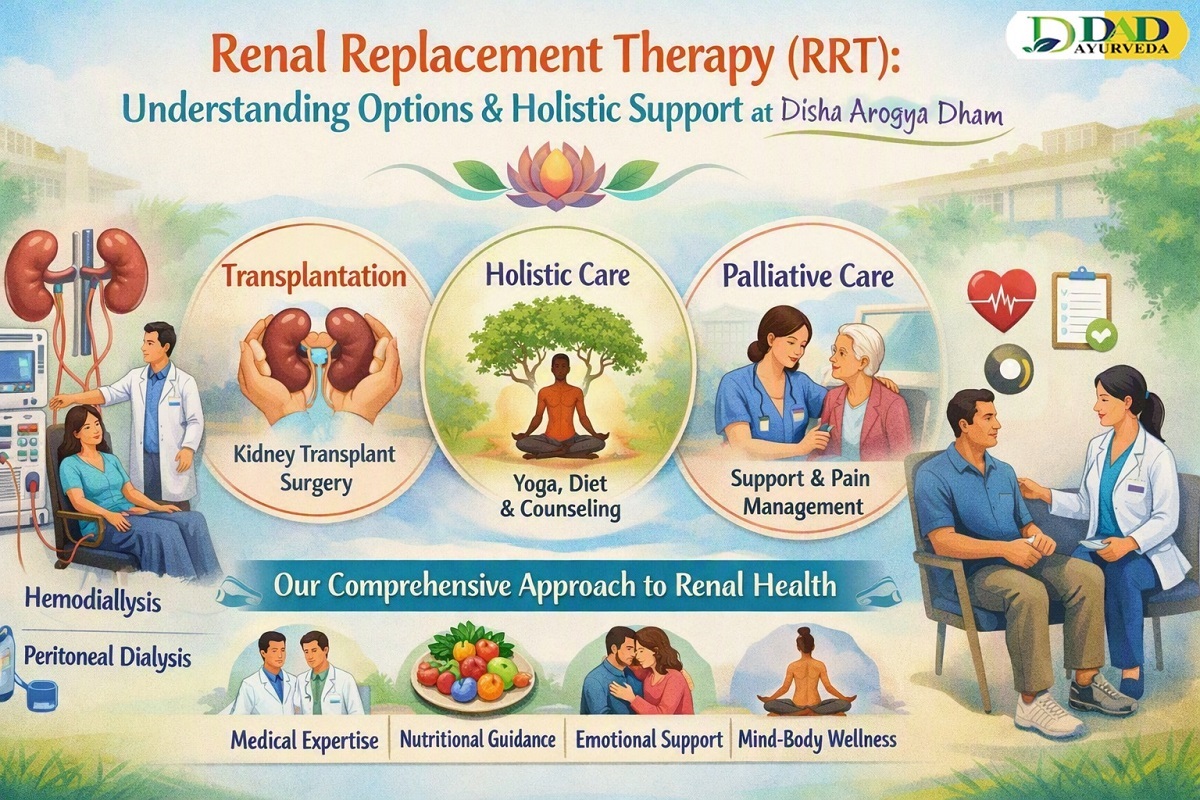
Renal Replacement Therapy (RRT): Understanding Options & Holistic Support at Disha Arogya Dham
Meta Title: Renal Replacement Therapy | Ayurvedic Support for Kidney Failure at Disha Arogya Dham Meta Description: Learn about renal replacement therapy (dialysis & transplant), its limitations, and how Disha Arogya Dham’s Ayurvedic & naturopathy approaches support chronic kidney disease patients in Jaipur with natural care. Focus Keywords: Renal Replacement Therapy, Kidney Failure Treatment Ayurveda, Dialysis Alternative, Chronic Kidney Disease Ayurveda, Disha Arogya Dham Kidney Treatment, Natural Kidney Care Jaipur, Reduce Dialysis Dependency Ayurveda, Panchakarma for Kidneys
What is Renal Replacement Therapy?
Renal Replacement Therapy (RRT) refers to life-sustaining treatments used when the kidneys can no longer adequately filter waste, excess fluid, and toxins from the blood. This typically occurs in advanced stages of chronic kidney disease (CKD) or end-stage renal disease (ESRD), when glomerular filtration rate (GFR) drops below critical levels (often <15 mL/min).
RRT does not cure kidney disease. It replaces lost kidney function to keep patients alive and manage symptoms such as fluid overload, high creatinine/urea, electrolyte imbalances, and uremia.
Main Types of Renal Replacement Therapy
- Hemodialysis Blood is filtered outside the body through a machine (dialyzer) using an artificial kidney. Sessions usually last 3–5 hours and are done 2–3 times per week in a dialysis center or sometimes at home.
- Peritoneal Dialysis The lining of the abdomen (peritoneum) acts as a natural filter. Dialysis fluid is introduced into the abdominal cavity via a catheter, left for a period, then drained. It can be done at home (CAPD or automated versions).
- Kidney Transplant A healthy kidney from a living or deceased donor is surgically placed. This is the preferred long-term option for eligible patients as it can restore more normal kidney function, but it requires lifelong immunosuppression and carries surgical and rejection risks.
Other supportive modalities in acute settings include Continuous Renal Replacement Therapy (CRRT) in intensive care.
Challenges and Limitations of Conventional RRT
While dialysis and transplant are essential and life-saving, they come with significant burdens:
- High cost and frequent hospital visits
- Dietary and fluid restrictions
- Risk of infections, cardiovascular complications, anemia, bone disease, and reduced quality of life
- Dependence on machines or lifelong medications
- Limited availability and long waiting lists for transplants in many parts of India
Many patients and families seek complementary approaches that may help support residual kidney function, reduce symptom burden, improve quality of life, or potentially delay progression when started early.
Ayurvedic & Naturopathic Perspective on Kidney Health
In Ayurveda, kidney-related disorders are often viewed through the lens of imbalances in Mutravaha Srotas (urinary channels), accumulation of Ama (toxins), and disturbances in Vata, Pitta, or Kapha. The focus is on:
- Detoxification and improving metabolic function
- Supporting residual nephron function
- Reducing inflammation and oxidative stress
- Strengthening overall vitality (Ojas) through diet, lifestyle, herbal medicines, and therapies such as Panchakarma
Clinical observations and studies on Ayurvedic interventions (including formulations with herbs like Punarnava, Gokshura, Varuna, Guduchi, and specific Basti therapies) have reported improvements in parameters such as serum creatinine, blood urea, and symptoms in some CKD patients. These approaches are generally positioned as complementary and supportive rather than a guaranteed replacement for dialysis or transplant in advanced ESRD.
Important note: Results vary by individual stage of disease, underlying cause (diabetes, hypertension, etc.), adherence, and overall health. Ayurvedic care should be supervised by qualified practitioners and coordinated with nephrologists. It is not a substitute for emergency or prescribed medical treatment.
How Disha Arogya Dham Supports Patients with Kidney Concerns
Disha Arogya Dham (DAD), based in Jaipur (Murlipura area), is an Ayurveda and Naturopathy Chikitsalaya & Research Centre that works with conditions including kidney failure as part of its broader holistic and beneficiary programs. Under the guidance of practitioners associated with the center (including Dr. Pankaj Rohilla and team), they emphasize natural and customized care.
Their approach typically includes:
- Personalized herbal formulations and Ayurvedic medicines aimed at supporting kidney function and reducing toxin load
- Panchakarma and detoxification therapies suited to the patient’s condition
- Naturopathy, diet planning, yoga, and lifestyle guidance
- Focus on root-cause support and overall wellness rather than only symptomatic management
- Beneficiary schemes and more affordable access for underprivileged patients (as part of their social welfare activities that also cover other chronic conditions)
They list kidney failure among the conditions addressed through their clinic and franchise/beneficiary network, offering packages that may include medicines, therapies, and ongoing support.
Contact for consultation: +91 90341 00716 | +91 7976808977 Location: Areas including 348/4c Jamnapuri / E-20 Kedia Palace, Murlipura, Jaipur – 302039
Practical Steps for Patients Exploring Options
- Get regular monitoring of creatinine, urea, eGFR, electrolytes, and hemoglobin under a qualified nephrologist.
- Discuss any complementary therapies openly with your treating doctor to avoid interactions.
- Focus on blood pressure and blood sugar control, low-protein/alkaline diet as advised, hydration (as permitted), and avoiding nephrotoxic substances.
- Early intervention in CKD stages offers better scope for supportive natural care to slow progression.
Conclusion
Renal Replacement Therapy remains a cornerstone of modern care for advanced kidney failure. At the same time, integrative centers like Disha Arogya Dham provide Ayurvedic and naturopathic support that many patients explore for symptom relief, better quality of life, and potential assistance in managing residual kidney function.
If you or a loved one is dealing with chronic kidney disease or exploring supportive options alongside conventional treatment, a personalized consultation at Disha Arogya Dham can help assess suitability.
This content is for informational and educational purposes only and does not constitute medical advice. Always consult qualified healthcare professionals (nephrologists and registered Ayurvedic practitioners) before starting or changing any treatment.
Suggested SEO Keywords / Tags: Renal Replacement Therapy, RRT, hemodialysis, peritoneal dialysis, kidney transplant, chronic kidney disease treatment, kidney failure Ayurveda, natural treatment for high creatinine, dialysis alternative Jaipur, Disha Arogya Dham, Ayurvedic kidney care, Panchakarma for CKD, reduce dialysis frequency naturally, holistic kidney treatment India.