





Uncategorized, Services
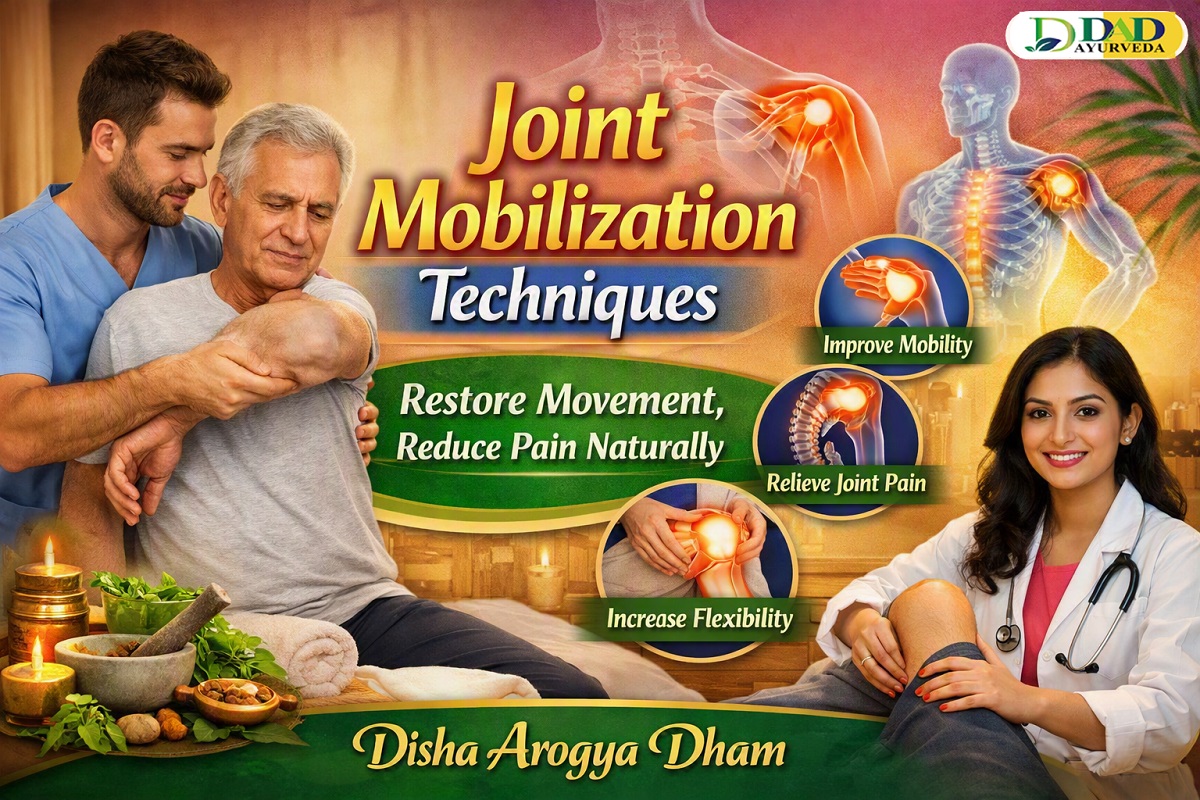
Joint Mobilization Techniques:
Aug
Joint Mobilization Techniques: Restore Movement, Reduce Pain Naturally | Disha Arogya Dham
SEO Keywords (Primary & Secondary): Joint Mobilization Techniques, Joint Mobilization, Joint Mobilization for Pain Relief, Improve Joint Mobility, Joint Stiffness Treatment, Manual Therapy for Joints, Ayurvedic Joint Treatment Jaipur, Natural Joint Pain Relief, Knee Joint Mobilization, Shoulder Joint Mobilization, Hip Joint Mobility, Disha Arogya Dham, Ayurveda & Naturopathy Joint Care Jaipur, Holistic Joint Treatment India
Introduction
Stiff, painful joints can limit daily life — whether from osteoarthritis, injury, prolonged sitting, or age-related wear. Joint mobilization techniques are skilled, hands-on manual therapy methods used to restore normal joint movement, reduce pain, and improve function without surgery or heavy medication.
At Disha Arogya Dham, an established Ayurvedic and Naturopathy centre in Jaipur (under the guidance of experienced practitioners), these modern physiotherapy-inspired techniques are integrated with classical Ayurvedic therapies. The result is a holistic approach that addresses both the mechanical restriction in the joint and the underlying dosha imbalance (especially Vata aggravation that causes dryness, stiffness, and pain).
This blog explains what joint mobilization is, how it works, its benefits, common techniques, and how Disha Arogya Dham combines it with Ayurveda for lasting relief.
What Are Joint Mobilization Techniques?
Joint mobilization is a passive, controlled movement applied by a trained therapist to a joint and its surrounding soft tissues. Unlike stretching (which targets muscles) or high-velocity manipulation (thrusts), mobilization uses gentle, rhythmic oscillations or sustained glides within the joint’s available range.
The goal is to:
- Restore accessory (arthrokinematic) movements — the small glides, rolls, and spins that occur inside the joint.
- Reduce pain via neurophysiological effects (desensitizing tissues).
- Improve synovial fluid circulation and joint nutrition.
- Lengthen tight capsule and ligamentous structures.
Therapists follow the Convex-Concave Rule to choose the correct direction of force based on the shape of the joint surfaces. Mobilizations are graded (commonly using the Maitland system):
- Grade I & II: Small or large amplitude movements in the early-to-mid range — primarily for pain relief and muscle guarding.
- Grade III & IV: Larger or smaller amplitude movements at the end of the available range — used to improve mobility and stretch the capsule.
- Grade V (manipulation) is a high-velocity thrust and is usually not part of basic mobilization.
Key Benefits of Joint Mobilization
- Immediate reduction in pain and stiffness
- Increased range of motion (ROM)
- Better joint lubrication and reduced crepitus
- Decreased muscle spasm around the joint
- Improved functional movements (walking, reaching, sitting-to-standing)
- Safe, non-invasive, and suitable for many age groups when performed correctly
- Complements exercise therapy and prevents compensatory patterns
Common conditions that respond well include shoulder impingement or frozen shoulder, knee osteoarthritis, hip stiffness, ankle sprains, tennis elbow, plantar fasciitis, cervical and lumbar stiffness, and post-immobilization restrictions.
Common Joint Mobilization Techniques by Body Region
Shoulder Complex Glenohumeral distraction, inferior/anterior/posterior glides, and scapular mobilizations help restore overhead reach and rotation — especially useful in frozen shoulder or impingement.
Knee Tibiofemoral distraction, anterior/posterior glides, and patellar mobilizations improve flexion-extension and reduce pain in osteoarthritis or after injury.
Hip Long-axis distraction, lateral and posterior glides address stiffness common in sedentary lifestyles or early osteoarthritis.
Spine & Other Joints Segmental mobilizations for cervical and lumbar spine, plus techniques for wrist, elbow, and ankle, are applied according to assessment findings.
All techniques require proper assessment of joint play, end-feel, and patient response. Contraindications include acute inflammation with high irritability, fracture, severe osteoporosis, malignancy, and certain systemic conditions — always evaluated first.
The Disha Arogya Dham Advantage: Integrating Mobilization with Ayurveda
At Disha Arogya Dham (Jaipur), joint care goes beyond isolated manual techniques. Classical Ayurvedic principles view most joint problems as Sandhigata Vata — aggravated Vata causing dryness, reduced lubrication, and restricted movement, often with accumulated Ama (toxins).
A typical integrated protocol may include:
- Assessment — Pulse diagnosis (Nadi Pariksha), prakriti analysis, and modern joint mobility testing.
- Preparatory therapies — Abhyanga (medicated oil massage) and Swedana (herbal fomentation) to warm tissues, improve circulation, and make joints more responsive to mobilization.
- Localized oil therapies — Janu Basti (knee), Kati Basti (lower back), Greeva Basti (neck), or Pichu — retaining warm medicated oils over the joint for deep nourishment.
- Joint mobilization sessions — Gentle graded mobilizations performed when tissues are warm and pliable.
- Supportive treatments — Basti (medicated enema) for systemic Vata pacification, herbal medicines, and guided therapeutic exercises or yoga.
- Lifestyle guidance — Diet, daily routine, and home mobility drills to maintain gains.
This combination often produces better and longer-lasting results than either approach alone: Ayurvedic therapies reduce inflammation and nourish tissues at a deeper level, while precise joint mobilizations restore mechanical freedom.
Who Can Benefit?
People with chronic knee, shoulder, or hip pain; office workers with neck and back stiffness; post-injury or post-surgical patients (after medical clearance); those seeking drug-free alternatives; and anyone noticing progressive loss of mobility with age.
Safety and Professional Care
Joint mobilization must be performed by trained professionals. Incorrect force, direction, or timing can aggravate symptoms. At Disha Arogya Dham, treatments are individualized, progressive, and monitored closely.
Conclusion & Call to Action
Joint mobilization techniques offer a precise, effective way to unlock stiff joints and reduce pain. When combined with the time-tested wisdom of Ayurveda and Naturopathy at Disha Arogya Dham, they become part of a complete healing journey that restores not just movement but overall well-being.
If you are experiencing joint stiffness, pain, or restricted mobility, schedule a consultation at Disha Arogya Dham, Jaipur.
Contact: +91 90341 00716 | +91 79768 08977 Address: 348/4c Jamnapuri, Murlipura, Jaipur 302039
Experience natural, holistic joint care and start moving freely again.